
A flight-proven Sterna returns to orbit to run customer workloads, and Morus, built on NVIDIA Jetson Thor, flies for the first time.
Space Tech Expo Bremen, Germany, 17 November 2026 – EDGX has booked two launches with D-Orbit in 2027 to fly its next generation of orbital compute systems. The missions bring more onboard capacity and expand EDGX’s compute-as-a-service offering, after the first AI models built by EDGX customers ran on Sterna’s in-orbit demonstration. The second mission carries the first flight of Morus, EDGX’s most powerful orbital compute system to date and a step towards orbital data centres.
Two missions in 2027
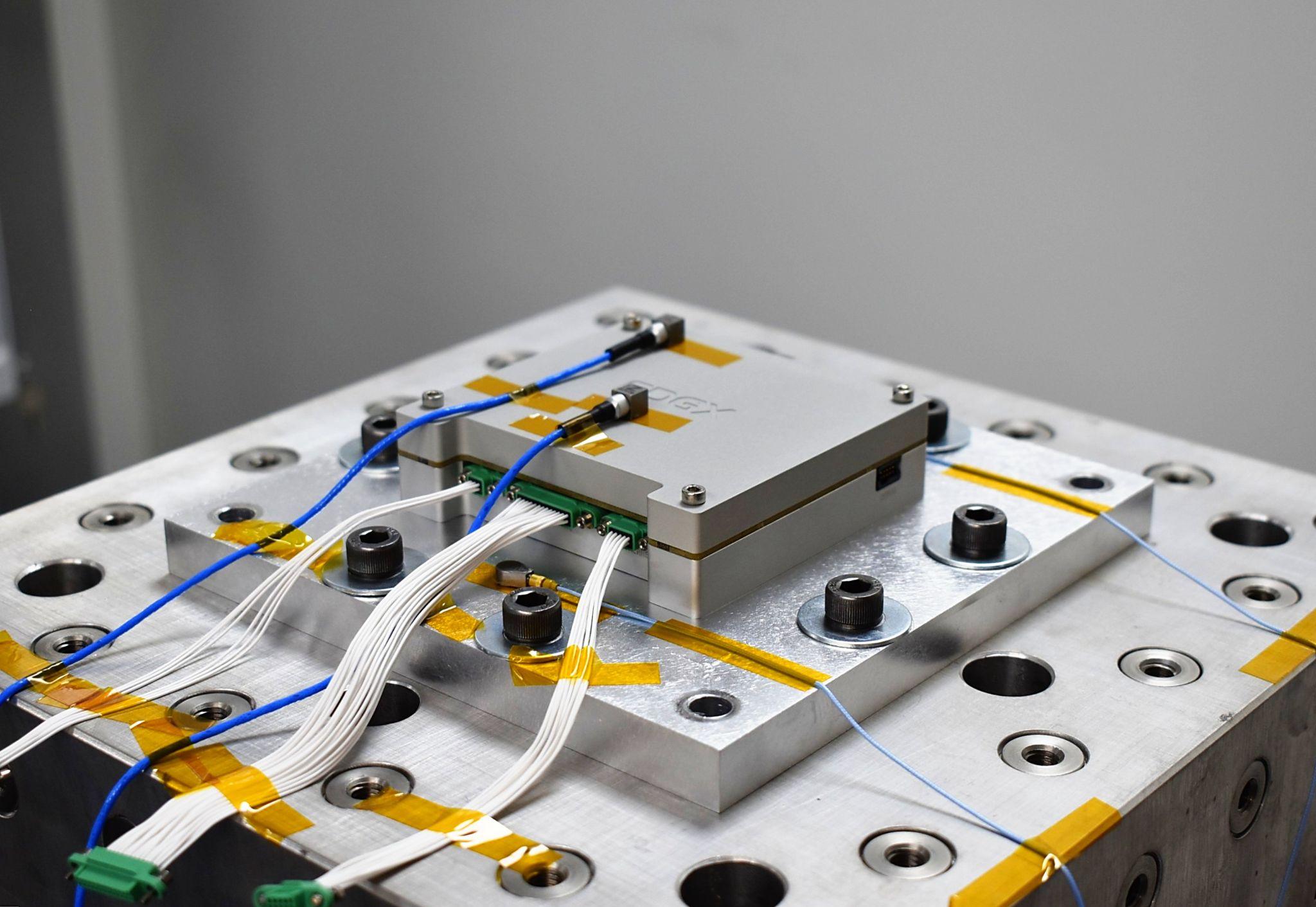
Out of Tern, February 2027. Sterna, EDGX’s flight-proven orbital compute system, returns to orbit on D-Orbit’s ION Satellite Carrier. It flies with more compute capacity than on its first flight and runs customer workloads on board: companies bring the AI models they built on Earth and run them in orbit.
Wingman, October 2027. Morus, EDGX’s most powerful orbital compute system, flies for the first time. Built on NVIDIA Jetson Thor, it can run larger AI models and compute-heavy algorithms than Sterna. Wingman is also EDGX’s first complete compute payload: a single system that captures, processes and delivers data.

“Europe needs its own orbital compute infrastructure, and we want to be the company that builds it. With these two launches we put more compute capacity in orbit and fly Morus, our most powerful orbital compute system, for the first time.”Nick Destrycker, Co-Founder and CEO of EDGX
D-Orbit launches and hosts both payloads on ION through its plug-and-play hosted payload service, so EDGX can focus on its orbital compute systems and the customer workloads they run.

“Sterna has already shown that AI models built on Earth can run in orbit, and we’re glad to welcome it on board ION for its next flight. Two missions with EDGX, including the first flight of Morus, are what our hosted payload service is built for: we take care of launch, integration and in-orbit operations, so EDGX can focus on their mission.”Matteo Zeni, Head of Sales of the Orbital Access Business Unit, D-Orbit
Both missions build on EDGX’s first flight. Sterna has been in orbit since March 2026, and one payload returned its first operational data within two weeks of launch.
Compute as a service
With compute as a service, customers run their own software on EDGX’s orbital compute systems and buy compute time, instead of building and flying their own hardware. EDGX has already demonstrated the service, with AI models built by customers running on Sterna’s in-orbit demonstration. The D-Orbit missions are the next step: more capacity and a broader offering, built on what EDGX has learned from previous missions.
Towards orbital data centres
Most satellite data is still sent to the ground raw and processed hours after it was captured. EDGX is building the compute layer of the space economy: orbital compute systems that process data in orbit, where it is collected, so satellites send down results instead of raw files. EDGX’s goal is to build orbital compute infrastructure that anyone can use, and Morus is a step towards it.
About EDGX
EDGX is a Belgian spacetech company building the compute layer of the space economy. Founded in 2023 and based in Ghent, it designs, tests and builds orbital compute systems that process data on board satellites, for satellite operators and manufacturers. Its systems let satellites act on their data in orbit instead of waiting hours for a ground station.
About D-Orbit
D-Orbit develops space logistics systems for orbital transportation, hosted payload operations, and in-orbit data processing, delivered through its flight-proven ION Satellite Carrier; the company is also developing GEA, a servicing spacecraft intended to support autonomous rendezvous, inspection, and refueling, as well as NOX, a synthetic-aperture radar (SAR) Earth observation satellite.